
Bali Freehold vs Lombok Right-to-Use: Which Title Offers Better Security in 2027?

Lombok Investment Hub Editorial Desk
July 9, 2026
7 min read
Key Takeaways
- Land prices in Kuta, Lombok are significantly lower, offering more affordable investment opportunities compared to Bali.
- The new Mandalika Fast Boat Pier enhances connectivity, boosting Lombok’s appeal for future property investments.
- Luxurious developments like the upcoming resort increase Lombok’s attractiveness for high-end investors seeking long-term growth.
- Saraya Lombok Villa Ownership’s post-July 2027 launch highlights Lombok’s evolving luxury real estate market potential.
In 2027, prospective property investors will weigh the benefits of Bali’s freehold versus Lombok’s right-to-use titles, both offering distinct advantages and challenges. While Bali’s freehold grants complete ownership, Lombok’s right-to-use offers flexibility and lower entry costs amid rapid regional development.
Understanding Bali Freehold
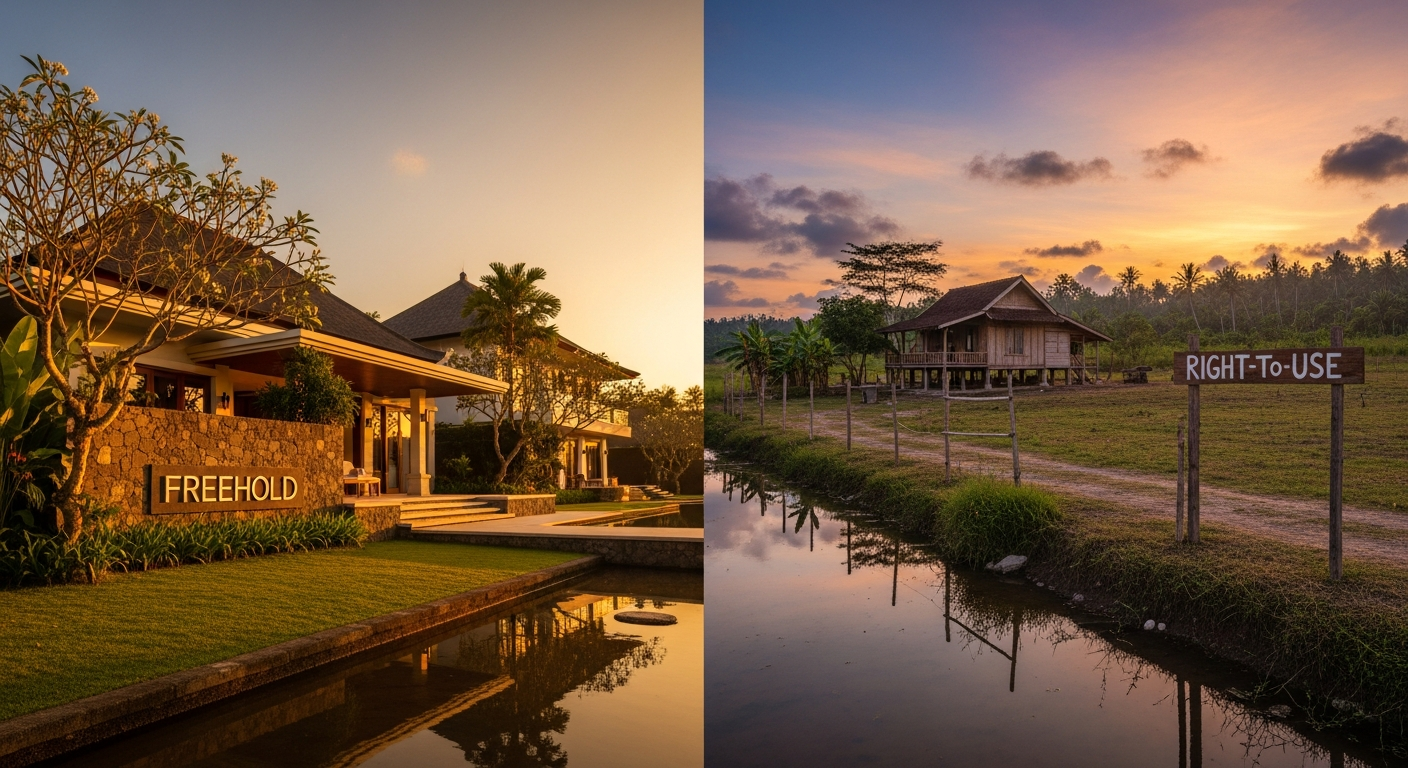
Freehold ownership in Bali provides buyers with the most comprehensive form of property rights available to an individual. It allows the holder to own the land and property indefinitely, with the ability to sell, lease, or transfer as they please. This type of ownership is traditionally more appealing to those looking for a permanent investment, as it provides complete control over the property.
However, freehold ownership in Bali is restricted to Indonesian nationals. Foreign investors often resort to nominee arrangements or set up Indonesian legal entities (PT PMA) to indirectly own freehold properties. This workaround involves legal complexities and potential risks, as the ownership still fundamentally relies on local partnerships or corporate structures. The initial setup costs for a PT PMA can range from USD $5,000 to $10,000, excluding ongoing operational expenses, which can add a further financial burden. Despite these challenges, Bali’s thriving tourism draws continuous interest, given its reputation as a tropical region.
Lombok Right-to-Use Explained
The right-to-use title in Lombok, also known as Hak Pakai, offers a viable alternative for foreign investors who wish to own land in Indonesia without the intricate legal navigation required in Bali. This form of ownership allows non-Indonesians to acquire rights to use the land for a specified period, typically up to 80 years, with options to renew.
Right-to-use titles are increasingly attractive due to the lower land costs in Lombok. In Kuta, Lombok—near the Mandalika development—the land price is approximately USD $25,000 per 100 square meters, which is significantly less than in Bali’s popular areas. This price advantage, coupled with the island’s burgeoning development, makes Lombok a promising investment location with a lower barrier to entry. Investors are also drawn to the area’s unspoiled natural beauty, featuring notable beaches and lush greenery, which enhances its potential as a premium destination for eco-tourism.
Bali’s Property Market in 2027
Bali continues to be a desirable location for international investors seeking tropical retreats or lucrative rental properties. The island’s established tourism infrastructure and global reputation keep demand high, which in turn sustains property prices. However, the market’s saturation and high entry costs are challenges that investors must consider.
By 2027, the trend in Bali is moving towards luxury developments and eco-friendly properties to cater to wealthy buyers looking for exclusive, sustainable living. Despite its established market, the relatively high prices in Bali, which can be double those in Lombok, might deter some investors seeking better returns on investment. Properties in popular areas of Bali can reach prices of over USD $50,000 per 100 square meters, illustrating the steep financial commitment required.
Lombok’s Investment Potential
Lombok is experiencing a surge in infrastructure developments, notably around the Mandalika area. The Mandalika Fast Boat Pier and New Port are set to become operational in 2027, enhancing connectivity to Bali and other islands. This accessibility improvement is expected to boost the local tourism industry and investment appeal.
With a scheduled luxury resort opening in 2027 and the launch of the Saraya Lombok Villa Ownership, the island is becoming an attractive alternative to Bali. High gross rental yields of 13–22% for well-managed short-term rentals in Kuta, Lombok, further underscore the island’s potential. Net yields after operating costs remain lucrative at 4–8%, demonstrating Lombok’s viability as a profitable investment destination. The gross yields are supported by the island’s popularity among tourists seeking more serene and less commercialized environments compared to Bali, ensuring steady occupancy rates throughout the peak seasons, which run from May to September.
Marina Bay City and Other Developments
Marina Bay City represents one of the most ambitious projects undertaken in South Lombok, with a staggering investment of USD $6 billion by Australian developers. This smart city project is set to revolutionize the area, combining residential, commercial, and recreational facilities over a span of several phases starting in 2026 and 2027.
The development aims to create a sustainable urban center that leverages cutting-edge technology and environmentally friendly practices. It will feature luxury residences, shopping malls, and entertainment venues, all integrated within a green urban landscape. Such large-scale projects are anticipated to further drive land appreciation rates, which already range from 10–20% annually in areas like Kuta. This is complemented by the planned integration of renewable energy sources, positioning the city as a model for future developments in the region.
Comparative Analysis: Bali vs. Lombok
When comparing Bali’s freehold with Lombok’s right-to-use, several factors must be considered. Bali offers the allure of complete ownership, which is ideal for long-term investors who want to secure a permanent residence. However, the associated costs and legal complications for foreign buyers present significant hurdles.
Lombok’s right-to-use title, on the other hand, provides a more accessible entry point with lower costs and strong growth potential. The island’s property values in areas like Kuta are appreciating by 10–20% per year, driven by infrastructure improvements and limited land supply. This growth, alongside significant investments like the USD $6 billion Marina Bay City project, highlights Lombok’s expanding opportunities. Investors are also attracted to the island’s potential for diversification into different tourism segments, such as wellness retreats and adventure tourism, given its rich natural resources and cultural heritage.
Conclusion: Which Offers Better Security?
In 2027, the choice between Bali’s freehold and Lombok’s right-to-use will depend on the investor’s goals. Bali’s freehold offers stability and autonomy but at a higher cost and with legal intricacies for foreigners. For those prioritizing lower entry costs and significant return potential within a dynamic and developing market, Lombok’s right-to-use is compelling.
With Lombok’s strategic developments and increasing accessibility enhancing its appeal, investors seeking growth and profitability may find Lombok’s right-to-use title a more secure investment choice in the rapidly evolving Indonesian property landscape. As Lombok continues to position itself as a viable alternative to Bali, it offers a multifaceted investment outlook driven by both tourism and broader economic development.
FAQs
Q? Can foreigners own freehold property in Bali?
A: Direct freehold ownership in Bali is restricted to Indonesian nationals. Foreigners can engage in nominee arrangements or establish a PT PMA, an Indonesian legal entity, to indirectly own property, although this method involves legal complexities and potential risks.
Q? What are the expected returns on property investments in Lombok?
A: Well-managed short-term rental properties in Kuta, Lombok, can yield gross rental returns between 13-22%. After accounting for operating costs, net yields are around 4-8%, presenting a profitable opportunity for investors.
Q? How does Lombok’s accessibility compare to Bali’s?
A: While Bali is more established in terms of international connectivity, Lombok’s infrastructure is rapidly developing. By 2027, the Mandalika Fast Boat Pier and New Port will enhance links between Lombok and Bali, alongside direct flights from major cities like Singapore, Jakarta, and Darwin, making Lombok increasingly accessible.
For wider arrangements, our team can coordinate end to end.
Planning something bigger across Indonesia? Plan wider itineraries with luxuryrajaampat.
Explore all lombokinvestmenthub.com options and plan your trip.
See also: How to Budget a Lombok Investment Project 2027: Construction and Permitting Costs, 2027 Lombok Property Prices: Hilltop vs Beachfront Value Trends and Forecasts.
Related Article
How to Calculate Total Investment Cost in Lombok 2027: Hidden Fees and Taxes
How to Calculate Total Investment Cost in Lombok 2027: Hidden...
How to Calculate Total Investment Cost in Lombok 2027: Hidden Fees and Taxes Key Takeaways Land in Kuta, Lombok costs...
Best Time to Tour Lombok Investment Zones in 2027: Avoiding Monsoon and Peak Season
Best Time to Tour Lombok Investment Zones in 2027: Avoiding...
Best Time to Tour Lombok Investment Zones in 2027: Avoiding Monsoon and Peak Season Key Takeaways Tour Lombok investment zones...
FAQ: How Long Does It Take to Get a Right-to-Use Title in Lombok 2027?
FAQ: How Long Does It Take to Get a Right-to-Use...
FAQ: How Long Does It Take to Get a Right-to-Use Title in Lombok 2027? Key Takeaways Obtaining a Right-to-Use Title...
